



luxury handbag investment

The luxury handbag market has evolved far beyond fashion statement territory. Today, the right bag purchased at the right moment can outperform traditional investment vehicles — and the smartest American shoppers know it. Whether you're eyeing a Bottega Veneta Jodie, a Saint Laurent Loulou, or a Loewe Puzzle, understanding what separates a timeless asset from a fleeting trend is everything. This definitive guide walks you through the key pillars of luxury handbag investment for 2026: resale value trajectories, brand heritage, iconic styles worth prioritizing, and the practical knowledge you need to shop with total confidence.
Why Luxury Handbags Are Legitimate Investment Assets in 2026
Not long ago, describing a handbag as an "investment" raised eyebrows in serious financial circles. That conversation has fundamentally changed. The global luxury resale market — valued at approximately $43 billion in 2023 — is projected to approach $70 billion by 2026, with authenticated luxury handbags consistently outperforming comparable categories including fine jewelry and entry-level watches in resale velocity and price appreciation. This is a luxury handbag investment landscape that demands to be taken seriously.
The mechanism driving this appreciation is straightforward: the major luxury houses have implemented aggressive and consistent retail price increases that effectively build equity into early purchases. Chanel has raised the price of its Classic Flap roughly 80% between 2019 and 2024 alone — a Medium Classic Flap that retailed at approximately $5,200 in 2019 now commands over $10,000 at US retail. Hermès has maintained an annual increase cadence of 8–12% across core leathergoods. Louis Vuitton and Bottega Veneta have followed similar trajectories. For American shoppers who purchase at retail today, those increases represent built-in equity that crystallizes at resale.
Secondary market platforms have simultaneously legitimized the category in ways that would have seemed unlikely a decade ago. The RealReal's authentication infrastructure, Vestiaire Collective's Certified program, and 1stDibs' dealer network have created a structured, transparent marketplace that institutional investors and sophisticated individual collectors now participate in alongside traditional fashion consumers. Entrupy and Real Authentication have further standardized third-party verification, addressing the provenance questions that once suppressed resale confidence.
A critical distinction for serious buyers: there is a meaningful difference between speculative and foundational investment pieces. Speculative pieces — limited editions, seasonal colorways, collaboration drops — can spike dramatically but require precise timing and a narrow buyer pool at exit. Foundational pieces — classic silhouettes in core colorways from heritage houses with documented resale histories — offer slower but more reliable appreciation with broad, liquid secondary markets. This guide focuses primarily on foundational investments, with selective attention to speculative opportunities where the risk-reward calculus is genuinely favorable.
- Global luxury resale market context: Projected to approach $70 billion by 2026; handbags lead all fashion categories in resale value retention.
- Brand price increases as built-in equity: Averaging 5–15% annually across top maisons, with Chanel leading the pace at historic highs.
- Authentication and provenance: Full documentation sets (receipt, box, dust bag, authenticity card) command 15–30% premiums on major resale platforms.
- Handbags vs. other luxury categories: Entry-level and mid-tier watches have shown inconsistent resale performance since 2022; classic handbags from top houses have maintained steadier appreciation curves.

Brand Heritage Deep Dive: The Houses Setting the Standard for 2026
Understanding why certain houses consistently produce investment-grade bags requires more than recognizing famous logos. The variables that matter are craftsmanship philosophy, creative director stability, production volume discipline, and the specific cultural positioning that drives long-term desirability among collectors. These are the houses generating the most serious investor and collector interest heading into 2026 — from the perennial titans to the quiet luxury brands reshaping what "investment piece" means for a new generation of American shoppers.
Bottega Veneta: The Quiet Luxury Powerhouse
No house better exemplifies the shift toward logo-free, craft-driven luxury than Bottega Veneta. The Daniel Lee era (2018–2021) fundamentally repositioned the Italian house from legacy status to cultural urgency, and Matthieu Blazy's tenure since 2022 has deepened that momentum with an even more rigorous focus on leatherworking as high art. The result is a brand with extraordinary collector credibility and a secondary market that has expanded dramatically without the volatility that typically accompanies hype cycles.
The Intrecciato weave — Bottega's signature hand-woven leather construction, developed in the 1960s — functions as one of luxury fashion's most recognizable craft signifiers precisely because it carries no logo. For American shoppers navigating the quiet luxury trend, Bottega represents perhaps the clearest expression of the aesthetic: recognizable to those who know, invisible to those who don't. That exclusivity of recognition has proven to be a durable driver of collector demand.
Key investment styles: The Jodie (medium, ~$2,900 retail) remains the house's most liquid resale piece, with consistent secondary market pricing at 85–100% of retail for excellent-condition examples. The Andiamo, introduced under Blazy, is emerging as a collector's item with strong forward momentum. The Sardine, a flat woven clutch that became an instant icon, commands above-retail premiums for sold-out colorways. For sustainable luxury fashion considerations, Bottega's commitment to traditional Italian craftsmanship and long-lasting construction over seasonal disposability aligns well with investment logic.
Saint Laurent: Parisian Edge With Proven Staying Power
Anthony Vaccarello's creative direction since 2016 has given Saint Laurent something that many houses struggle to maintain: visual coherence across seasons. The house's aesthetic — rooted in the rock-and-roll sensuality and architectural precision of its founding era — has been consistently expressed rather than reinvented, which has been enormously beneficial for the investment case of its core bag styles.
The Loulou, launched in 2016, has become one of the most studied resale performers in the accessible luxury tier. At approximately $1,550 retail for the small size, it represents a genuine entry point into investment-grade leathergoods — the chain-handled quilted design in smooth calfskin has demonstrated consistent value retention at 75–90% of retail on major resale platforms, with exceptional-condition examples in black occasionally exceeding retail pricing. The Le 5 à 7, a structured half-moon bag that has become a contemporary classic, follows a similar trajectory in the $1,800–$2,400 range.
Saint Laurent's price point context ($1,200–$3,500 across core styles) makes it one of the most accessible houses for first-time luxury handbag investors who want proven resale performance without committing to five-figure purchases. The brand's consistent aesthetic vision means even styles from several seasons ago read as current — a critical factor in secondary market desirability.
Loewe: The Intellectual Luxury Brand With Accelerating Collector Demand
Jonathan Anderson's transformative decade at Loewe has turned a 178-year-old Spanish leather house into arguably the most critically respected luxury brand in the world. Anderson's approach — grounding contemporary design decisions in Loewe's extraordinary craft heritage, with deep investment in artisan partnerships and cultural programming through the LOEWE Foundation — has created a brand identity with exceptional depth and collector loyalty.
The Puzzle bag, first introduced by Anderson in 2015, has achieved the rare status of a contemporary design classic: its three-dimensional geometric construction is genuinely innovative from a leatherworking standpoint, and its architectural profile reads as distinctly modern without being trend-dependent. On secondary markets, the Puzzle Small (approximately $3,150 retail) holds value at 80–95% of retail for pristine examples, with certain colorways and special editions trading above retail. The Flamenco — a drawstring style rooted in the house's original DNA — has experienced a significant collector resurgence, reflecting growing awareness of Loewe's pre-Anderson archive among serious fashion investment buyers.
Perhaps most significantly for investors: Loewe is outpacing peers in secondary market growth rate, not just absolute pricing. The combination of Anderson's cultural cachet, genuine craft heritage, and relatively controlled production volume creates scarcity dynamics that support continued appreciation.
The Row, Celine, Gabriela Hearst & Rising Names to Watch
The most interesting emerging chapter in luxury fashion investment pieces involves a cluster of houses whose investment cases are built on scarcity, creative consistency, and the specific cultural currency of extreme restraint. For American shoppers attuned to the quiet luxury movement — one of the most durable stylistic shifts in the US luxury market since the minimalism of the 1990s — these names deserve serious attention.
The Row, founded by Mary-Kate and Ashley Olsen in 2006, has cultivated one of fashion's most intensely loyal collector communities with near-zero marketing spend. The Margaux tote series (10-inch and 15-inch iterations) represents the pinnacle of stealth-wealth bag design in the current American market — priced at $3,900–$5,850 retail, these vegetable-tanned leather pieces are produced in limited quantities and rarely appear on major resale platforms, which itself signals collector reluctance to liquidate. When they do surface, condition premiums are steep.
Celine under Hedi Slimane has built a logo-driven collectibility story around the Triomphe canvas — the house's signature brown-on-tan monogram — that has proven more durable than many predicted. The Triomphe chain bag (approximately $2,350 retail) has maintained consistent resale activity and is increasingly regarded as a generational collectible in the YSL-Celine tradition.
Gabriela Hearst represents perhaps the most compelling sustainable luxury fashion investment case in the current market: extremely limited production, genuine commitment to environmental accountability, and a collector base that skews toward high-information buyers who understand long-term value preservation. The Nina bag and Demi tote have cult followings disproportionate to the brand's marketing presence.
The Most Coveted Styles to Invest In Right Now: A Curated Shortlist
Brand analysis establishes context; specific bag recommendations drive decisions. The following shortlist reflects styles that US shoppers should prioritize in 2026 based on documented resale performance, cultural momentum, production scarcity, and runway longevity. Sizing is provided in inches; pricing reflects current US retail as of late 2025.

Under $2,000: Entry-Level Investment Pieces With Real Upside
The sub-$2,000 tier has become increasingly interesting for investment-oriented shoppers as several brands in this range have demonstrated genuine — if modest — secondary market appreciation. These are not the highest-return plays in the market, but they offer accessible entry into a collecting practice and, in select cases, real upside.
Jacquemus Le Chiquito (~$550–$750 retail): The most-discussed entry-level investment bag of the past three years. Its cult status is genuine — driven by extraordinary social media saturation and Simon Porte Jacquemus's intuitive understanding of viral desirability — and its secondary market is active and well-documented. The bag's very small scale (approximately 5" × 4.5") limits its utility, which paradoxically strengthens its collector appeal. Buy the micro sizes in black or tan for maximum liquidity.
Saint Laurent Loulou Small (~$1,550 retail; 7.5" × 5" × 2"): As noted above, this is one of the most defensible first investments in the market. Gold hardware, black smooth calfskin, and chain strap. Classic, liquid, and produced with consistent quality over nearly a decade of commercial success.
Chloe styles in this tier — including the Camera Bag and the Bracelet Hobo — offer entry points into a house with strong heritage and consistent collector community activity, particularly in the brown and tan colorways that define the Chloé aesthetic identity.
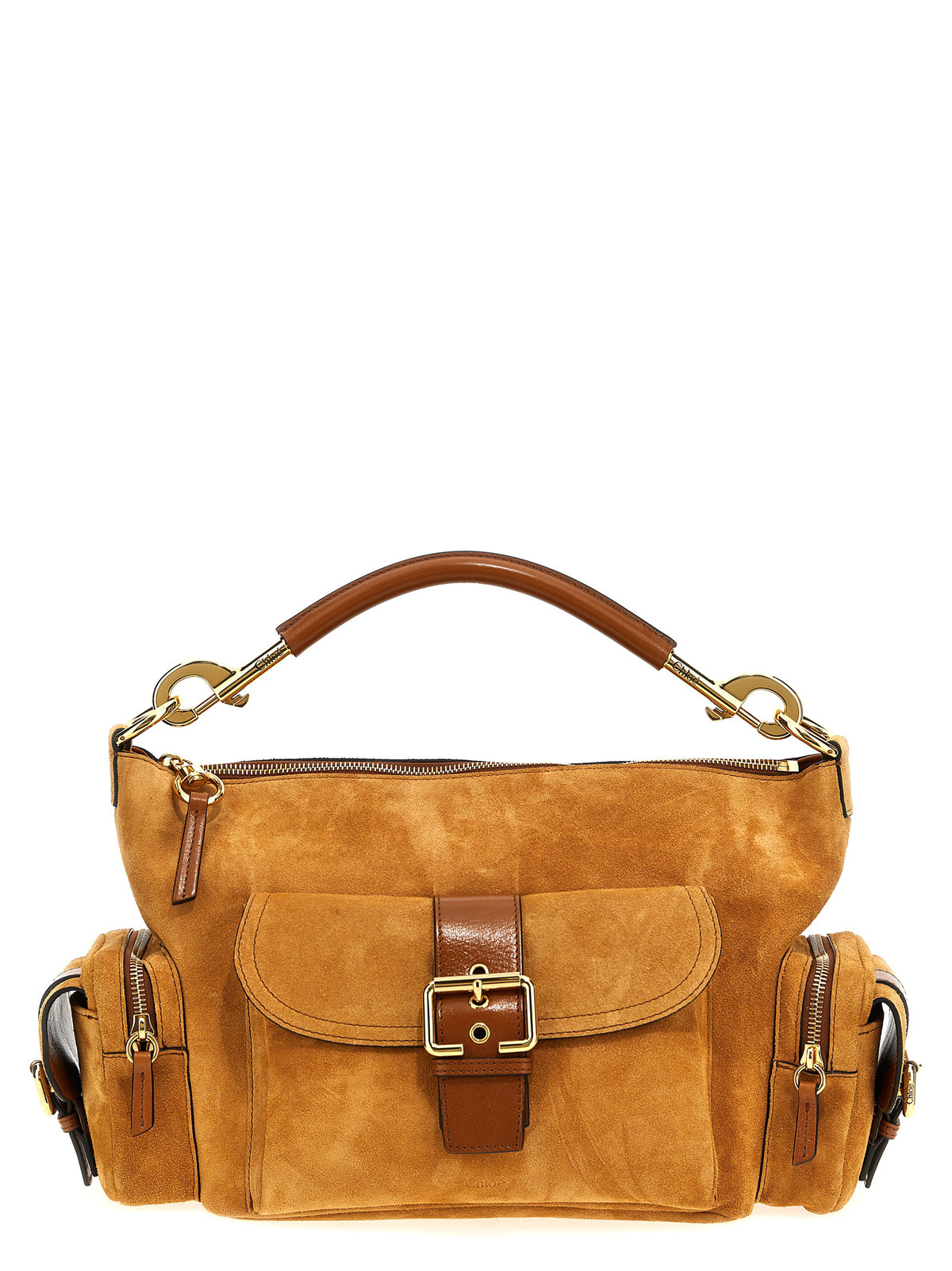


$2,000–$5,000: The Sweet Spot for Serious Collectors
This is the most strategically interesting tier for American luxury handbag investors in 2026. The brands operating here — Loewe, Bottega Veneta, Celine, The Row — represent the strongest intersection of craft credibility, cultural momentum, and documented resale performance outside the ultra-luxury tier. This is where a luxury capsule wardrobe investment strategy begins to pay serious dividends.
Loewe Puzzle Small (~$3,150 retail; approximately 9.5" × 6" × 6"): The definitive investment recommendation in this tier. Geometric construction that is genuinely difficult to manufacture, a design with nearly a decade of collector appreciation, strong brand momentum under Jonathan Anderson, and a secondary market that deepens each season. Buy black, tan, or clay for maximum liquidity; special editions and collaboration colorways for speculative premium potential.
Bottega Veneta Jodie Medium (~$2,900 retail; approximately 13" × 10"): The most liquid piece in Bottega's current lineup. The Intrecciato hobo silhouette translates across professional and personal contexts, and the brand's sustained quiet luxury positioning means this bag reads as current across multiple style cycles. Black, brown, and ivory are the strongest resale colorways.
Celine Triomphe Canvas (~$2,350 retail): The logo case for investment. Slimane's Triomphe branding has achieved a secondary market presence that rivals Gucci's GG monogram in its era — recognizable, desirable, and supported by an active resale community. The structured chain bag format is the most investment-grade expression of this aesthetic.
The Row Margaux 10 (~$4,200 retail; 10" × 6.5" × 5"): The stealth-wealth pinnacle at this price point. Vegetable-tanned leather, architectural proportions, and a brand whose entire identity is built on restraint and permanence. Rarely discounted, rarely over-produced, and increasingly regarded as one of the defining American luxury fashion investment pieces of the 2020s.
$5,000 and Above: Trophy Pieces and Long-Term Holds
At this tier, you're buying documented history alongside exceptional craft. The investment cases here are the most established in the market — and the most scrutinized. Condition, provenance, and authentication are paramount; the potential returns are also the highest.
Chanel Classic Flap (Medium: ~$10,200 retail; approximately 10" × 6.5" × 2.5"): The most discussed luxury handbag investment of the past decade. Despite — or because of — Chanel's extraordinary retail price increases (the medium Classic Flap has increased over 80% since 2019), it remains one of the most consistently appreciating fashion assets in the world. Black caviar leather with gold hardware is the canonical investment configuration. Authenticated examples in pristine condition regularly achieve 110–140% of current retail on major secondary platforms. The investment case is as strong as it has ever been, provided you're buying from a reputable source with full documentation.
Hermès Birkin and Kelly: The undisputed gold standard of handbag investment. Birkin 25 and 30 sizes in Togo or Clemence leather with gold hardware (Sellier Kelly 25/28 for the structured silhouette preference) represent the deepest, most liquid secondary market in luxury fashion — authenticated examples from reputable sources regularly command 30–100% above retail, with exotic leathers and rare colorways achieving multiples that rival fine art. The retail acquisition challenge is well-documented: Hermès operates an allocation system tied to purchase history and SA relationships that can require significant boutique spend before a bag offer is extended. For American shoppers, the strategy requires patience and consistent boutique engagement — but the financial logic of accessing below-market pricing is compelling. There is no more defensible long-term hold in the luxury handbag investment category.
Louis Vuitton Capucines (MM: ~$6,750 retail; approximately 12" × 8" × 4"): LV's most investment-grade offering is the Capucines — a structured tote that sits entirely outside the monogram canvas portfolio and instead relies on exceptional calfskin construction and a sophisticated hardware signature. While LV's monogram pieces have inconsistent resale performance, the Capucines occupies a distinct collector tier with documented appreciation, particularly in black and neutral colorways. It also serves as one of the more interesting entry points for luxury fashion for men over 40 who are building investment-grade accessories portfolios — the proportions and construction read as gender-neutral in the most premium sense.
Resale Value Explained: What Makes a Luxury Bag Appreciate (or Depreciate)
The mechanics of handbag resale value are more systematic than most buyers realize. Understanding these variables allows you to shop more strategically and maintain your investment more effectively over time.
The five factors that drive resale premiums:
- Scarcity: Limited production runs, discontinued styles, and allocation-controlled pieces command premiums because supply is structurally constrained. Hermès operates the most sophisticated scarcity management in the industry; Bottega Veneta and The Row maintain controlled production as brand philosophy.
- Condition: The single most controllable variable in your investment return. A "Pristine" or "Excellent" graded piece on The RealReal can command 20–40% more than the same style in "Good" condition. Use your bag — but store it correctly and address minor wear promptly.
- Colorway: Classic neutrals (black, camel, tan, chocolate, navy) consistently outperform seasonal colors in resale liquidity and price stability. Bright or unusual colorways can spike in value but require patient, specific buyers.
- Hardware: Gold hardware outperforms silver and two-tone in resale across virtually every brand and price tier. Ruthenium (dark oxidized metal) holds well on certain styles but serves a narrower buyer pool. Brushed metals show wear more visibly and should be examined closely in pre-owned purchases.
- Provenance: Full original packaging (dust bag, box, authenticity card, purchase receipt, care booklet) is not optional for maximum resale value. On major US resale platforms, complete packaging sets command 15–30% premiums and dramatically accelerate sale velocity.
Storage best practices for investment handbags: Store bags stuffed with acid-free tissue paper (never newspaper) to maintain structure. Keep in original dust bags. Store upright, never stacked. Maintain consistent humidity between 40–60% RH — excessive humidity promotes mold on untreated leathers, while very low humidity can cause desiccation and cracking. Avoid direct sunlight and fluorescent light, both of which accelerate color fading in calfskin. Do not store in plastic bags or sealed containers, which trap moisture.
Platform comparison for US sellers: The RealReal offers the most straightforward consignment process for American sellers and the largest US buyer pool, but commissions range from 40–55% for bags under $10,000 — significant. Vestiaire Collective's peer-to-peer model gives sellers more pricing control with lower fees (typically 12–15% + a fixed fee), but requires more active management and can take longer to sell. Private sale — through Instagram collector communities, auction houses for ultra-premium pieces, or direct buyer relationships — offers maximum return but requires authentication infrastructure and buyer trust. For first-time sellers, The RealReal's simplicity justifies the higher commission; for experienced sellers with documented provenance, Vestiaire Collective or private sale is the financially superior choice.
How to Buy Smart: Retail, Pre-Owned, and Gray Market Strategies for US Shoppers
The acquisition channel you choose significantly impacts both your purchase price and your eventual resale position. Each channel has specific strategic advantages and risk factors that are worth understanding before you commit.
Buying at Retail: SA Relationships and Boutique Strategy
For most investment-grade bags below the Hermès tier, retail remains the cleanest acquisition path — you receive full provenance, current retail pricing locked in before the next price increase, and zero authentication risk. Building a relationship with a specific sales associate at your preferred boutique unlocks access to waitlists, pre-launch notifications, and the kind of personalized service that occasionally surfaces pieces before they hit the floor.
At Bottega Veneta, Saint Laurent, Loewe, and Celine, retail access for core styles is generally available without extraordinary effort — though popular colorways and limited editions sell quickly at major US boutiques in New York, Los Angeles, and Miami. Consistency matters: visiting regularly, purchasing across categories (ready-to-wear, shoes, accessories), and demonstrating genuine brand enthusiasm rather than transactional intent all contribute to a stronger boutique relationship over time.
Hermès Allocation Decoded for US Buyers in 2026
The Hermès allocation system is the most discussed and least transparently documented process in luxury retail. What US customers need to understand in practical terms: there is no official waitlist. Bag offers are extended by individual SAs based on accumulated purchase history, relationship depth, and boutique-level inventory availability. The spend requirement threshold — while officially denied by Hermès — is widely reported by US buyers to require $5,000–$15,000 in non-bag purchases before a first Birkin or Kelly offer is extended at many American boutiques, with the specific amount varying by location, SA, and desired bag specification.
The strategic approach for serious US buyers: identify a single boutique and a single SA. Purchase consistently across categories — silk scarves, porcelain, home goods, and small leather goods all count toward your profile. Be explicit about your interest in leathergoods without being demanding. Attend boutique events when invited. The process requires patience measured in months or years, but the financial reward — accessing a Birkin 30 in Togo leather at ~$12,000 retail when authenticated secondary market examples trade at $18,000–$25,000 — is among the most compelling in the luxury investment universe.
Pre-Owned Market Guide: Condition Grades Explained
Pre-owned acquisition makes strategic sense for discontinued styles, limited editions no longer available at retail, and situations where pristine examples can be found at meaningful discounts to current retail pricing. Understanding condition grades is essential before purchasing:
- Pristine / Never Worn: Original tags attached, zero signs of use. Commands retail-adjacent or above-retail pricing for high-demand styles. Rare and worth the premium for investment buyers.
- Excellent: Minimal signs of light use; hardware intact with minor surface scratches; interior clean; no structural issues. The sweet spot for investment buyers — lower than Pristine pricing but fully resaleable at strong values.
- Very Good: Light to moderate wear visible on corners, hardware, or interior; no major structural issues; presentable for use. Appropriate for personal use purchases; less ideal for pure investment buyers due to narrower resale market.
- Good: Visible wear throughout; may require professional restoration. Priced at significant discount to retail. Appropriate for use-focused buyers; generally not recommended for investment purposes.
For third-party authentication on pre-owned purchases, Entrupy (AI-based authentication with physical submission) and Real Authentication (expert-based, widely accepted by US resale platforms) are the most reputable services available to American buyers. Budget $20–$150 for authentication depending on the service and bag value — always factor this into your pre-owned math.
Duty-Free and European Boutique Purchases: What US Travelers Need to Know
European boutique purchases — particularly in France, Italy, and the UK — can offer meaningful savings for American travelers due to VAT refund eligibility (typically 12–20% of purchase price, depending on country). French VAT is 20%, with a standard refund rate of approximately 12% after processing fees through services like Global Blue or Planet. On a $4,000 Loewe Puzzle purchased in Madrid, that's a real $480–$600 in recoverable value.
US Customs and Border Protection (CBP) rules require declaration of all goods purchased abroad. The personal duty-free exemption is $800 per traveler; amounts above this threshold are subject to duty, typically 3–9% for leather goods classified under HTS codes 4202.XX. For a $10,000 Chanel Classic Flap, this means declaring the purchase and paying approximately $900 in duties — which may still leave you net positive compared to US retail after VAT refund. Calculate carefully, declare honestly, and keep all receipts. CBP audits of luxury goods purchases have increased in frequency; non-declaration carries penalties that are never worth the risk.
"The most important thing a first-time luxury handbag investor can do is resist the urgency to buy and invest that time in education instead. The best investors in this category are always the most informed ones."
Frequently Asked Questions
Which luxury handbags hold their value the best?
Hermès Birkin and Kelly bags consistently top resale charts — authenticated examples routinely sell for 20–100% above retail depending on leather, hardware, and color. Chanel Classic Flaps and Boy Bags follow closely, buoyed by the brand's aggressive retail price increases (over 80% on the Classic Flap between 2019 and 2024). Beyond the top tier, Bottega Veneta's Jodie and Loewe's Puzzle have shown impressive resale resilience thanks to strong brand momentum and controlled production. As a general rule, classic silhouettes in black calfskin or neutral leathers with gold hardware outperform trend-driven styles across virtually every brand and price tier.
Is it better to buy a luxury handbag new or pre-owned for investment purposes?
It depends on your goal. Buying new from a boutique gives you full provenance — original receipt, packaging, and documentation — which maximizes your resale position. For Hermès, retail is the only way to access pieces at below-market prices, making it the superior financial move when access is possible. Pre-owned makes sense for discontinued styles, limited editions no longer available at retail, or when you can find a pristine-condition example at a meaningful discount to current retail. Always factor authentication costs ($20–$150 depending on the service) into your pre-owned math before committing.
How much should I budget for a handbag that will actually appreciate in value?
There's no single threshold, but the $2,000–$5,000 range offers the most accessible entry points with documented resale performance. Bags below $1,500 can hold value but rarely appreciate significantly. Above $5,000, you're entering trophy territory where condition and authentication scrutiny is intense but upside potential is highest. Think of it in tiers: protect your investment at entry level, grow it in the mid range, and maximize it at the top end — but only when you have the knowledge and storage infrastructure to maintain a piece's condition over time.
Do colorful or limited edition bags appreciate more than classic styles?
It's a nuanced answer. Hermès exotic leathers and rare colorways — Rose Shocking ostrich, Vert Anis croc — can command extraordinary premiums, but they require a narrow, highly specific buyer pool at resale. For most investment buyers, classic neutral colorways — black, camel, navy, chocolate — in smooth or grained calfskin are the safest bets for liquidity and consistent appreciation. Limited editions can spike dramatically in value but can also plateau quickly. Unless you have deep category expertise and a strong network of potential buyers, neutral classics are the more reliable long-term holds.
What's the single best luxury handbag to buy as a first investment piece in 2026?
If budget allows, the Chanel Classic Flap in black caviar leather with gold hardware remains the most defensible first investment — it has a multi-decade track record of price appreciation, universal desirability, and a buyer pool that spans every resale channel. If you're working with a more accessible budget, the Bottega Veneta Jodie in a classic tone (black, brown, or cream) or the Loewe Puzzle Small offer genuine collector credibility, strong brand momentum, and resale markets that are only deepening. Whatever you choose: buy the best condition you can afford, keep all original packaging, and document your purchase with a receipt.
Wanan Luxury curates and sells the products featured in this article. Editorial selection is independent from commercial considerations. Prices and availability are accurate at time of publication. Read about our editorial standards